Order Management System: Streamlining Creative Collaboration for Campaign Fulfilment
Case
Study
Macbook Air
DURATION
January 2025 - March 2025
Role
Senior UI/UX Designer at a fast-paced AdTech company BLKBOX.ai, responsible for leading the end-to-end UX of a new Order Management System designed to streamline campaign requests and creative collaboration. Collaborated closely with the CTO, PM, and engineers to build a system from scratch that empowered clients and internal teams to track, submit, and manage ad video requests seamlessly. Delivered a scalable interface that bridged creative workflows with operational clarity—improving campaign accuracy, turnaround speed, and cross-team visibility.
Overview
About
WHAT WAS THIS PROJECT?
The Order Management System (OMS) was built from the ground up to streamline how marketing requests and ad creatives are submitted, managed, and delivered across teams. Before this, campaign requests were scattered—handled via Slack threads, emails, or shared docs—leading to delays, miscommunication, and missed deadlines. This platform became a centralised workspace where clients, internal teams, and creatives could align in real time, track video orders, and collaborate seamlessly across production cycles.
Product Vision
WHAT DID WE IMAGINE?
We envisioned a unified workspace that brings structure, clarity, and accountability to creative order handling. As the demand for high-quality, fast-turnaround marketing videos grew, we needed a system that could handle versioning, streamline brief submissions, and provide transparency throughout the asset lifecycle. The goal wasn’t just operational efficiency—it was to empower teams to focus on creating, not chasing information. By reducing back-and-forth, surfacing status insights, and integrating brand kits directly into workflows, OMS helped bridge gaps between clients and creatives—and unlocked scalable, creative collaboration.
Context
Background
WHAT’S GOING ON?
Ad fatigue is real—and it's costing brands performance. Marketing teams are under pressure to constantly produce fresh, engaging creatives, but traditional ideation is time-consuming, subjective, and often disconnected from performance data. With markets evolving rapidly and campaigns getting shorter, creative teams need a faster, more intelligent way to brainstorm ideas that actually work.
Ideate was born from this gap: a tool that blends data, AI, and storytelling to help teams generate effective ad concepts in minutes—not weeks.
Problem
WHAT DID WE IMAGINE?
Before this system, there was no structured way to request, revise, or track creative orders within the AdTech platform. Clients and internal teams relied on disjointed emails, manual briefs, and unclear status updates—leading to frequent miscommunication, inconsistent brand assets, and delays in production. There was no central space to manage creative briefs, monitor revision cycles, or ensure brand alignment across campaigns.
Opportunity
WHERE CAN WE GO TO?
We saw an opportunity to build a scalable Order Management System tailored for cross-functional collaboration between clients and internal creative teams. By streamlining creative requests, revisions, and approvals into a unified dashboard, we aimed to boost order accuracy, reduce miscommunication, and speed up asset delivery. Our goal was to empower marketing teams with clarity, control, and confidence throughout the production cycle—ultimately reducing time-to-launch and elevating campaign quality.
How did we turn a complex creative workflow into a seamless order experience?
Research Insights
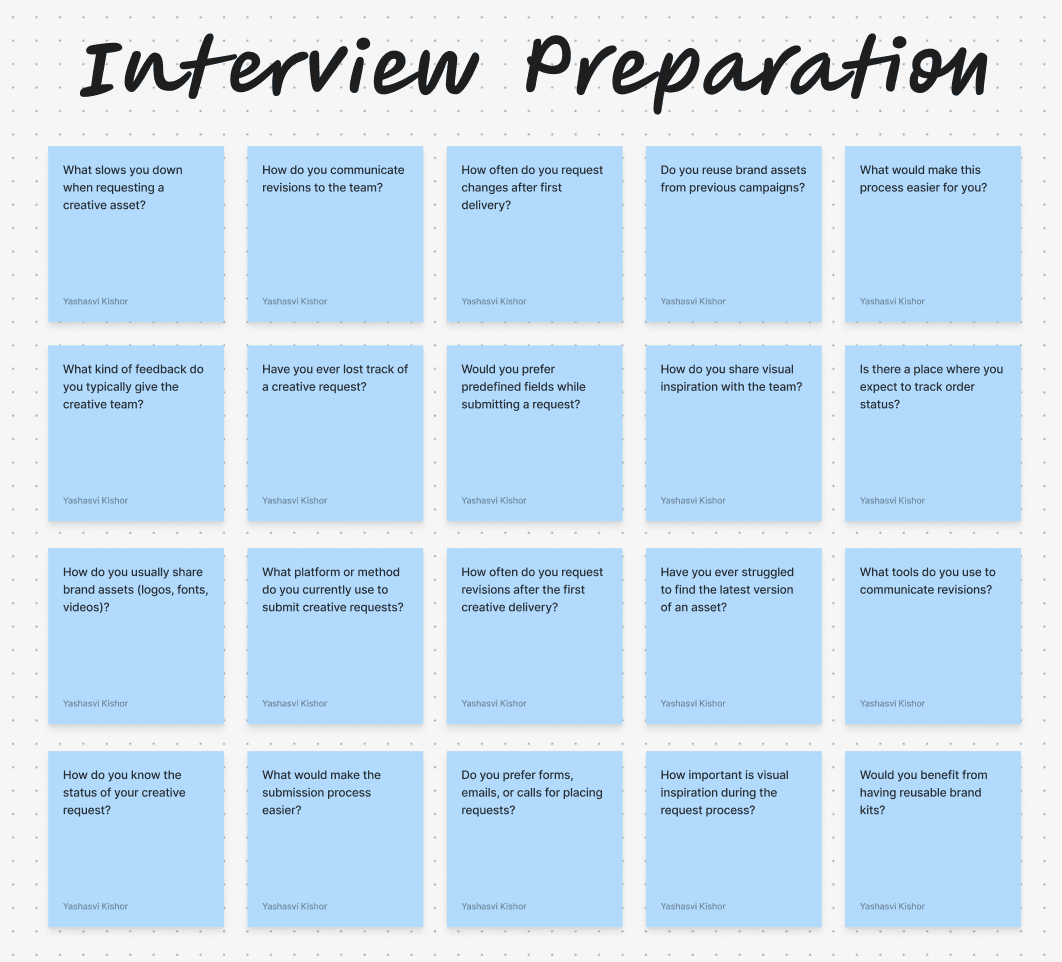
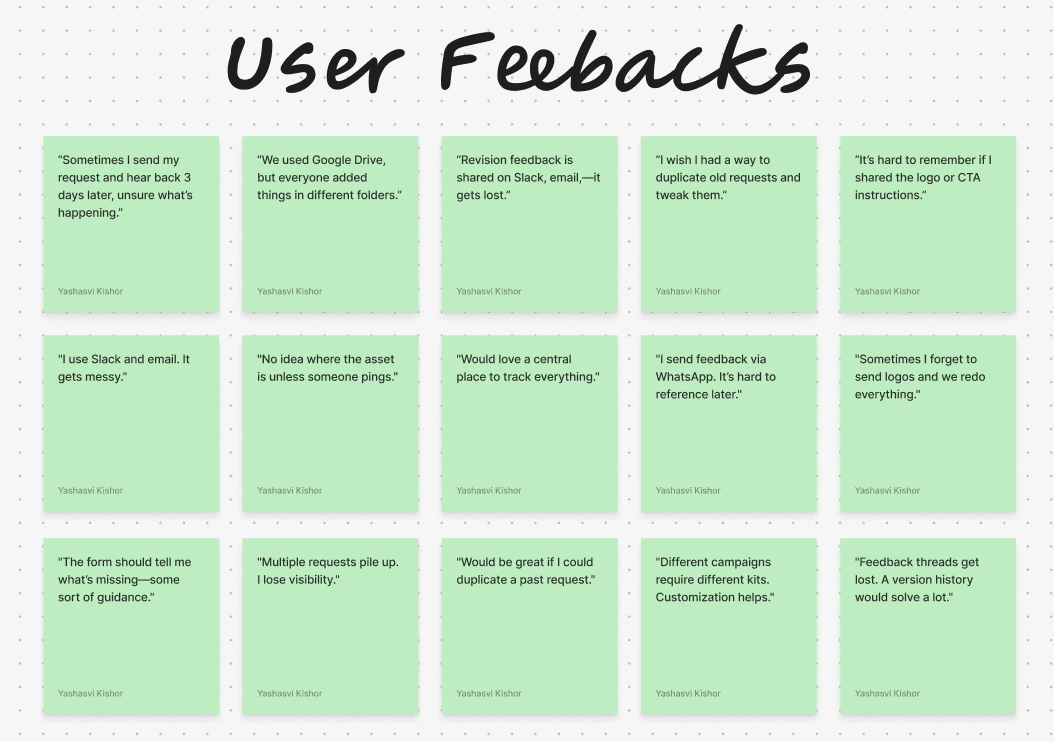
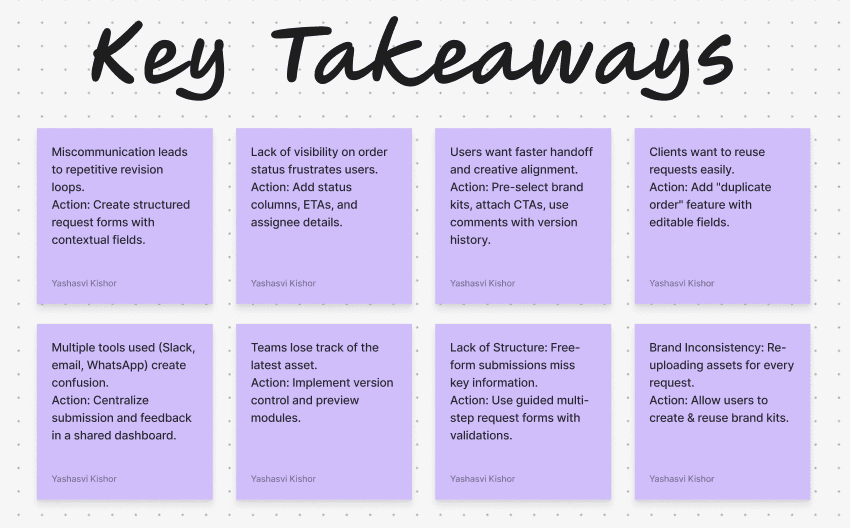
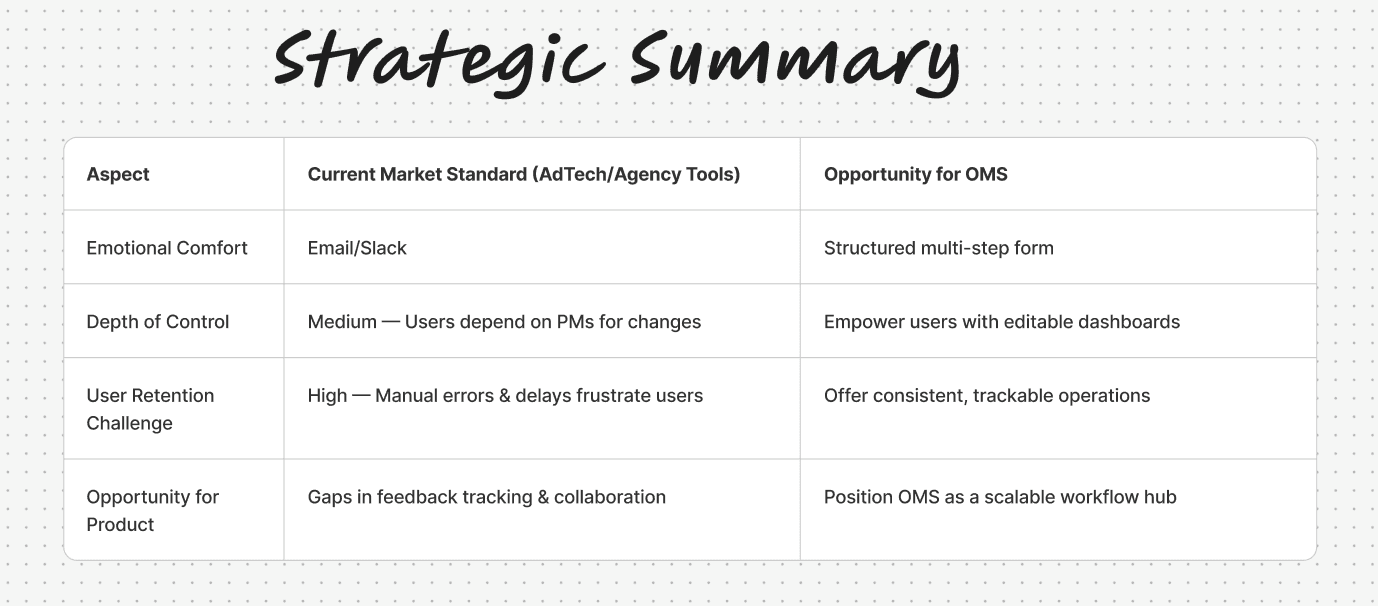
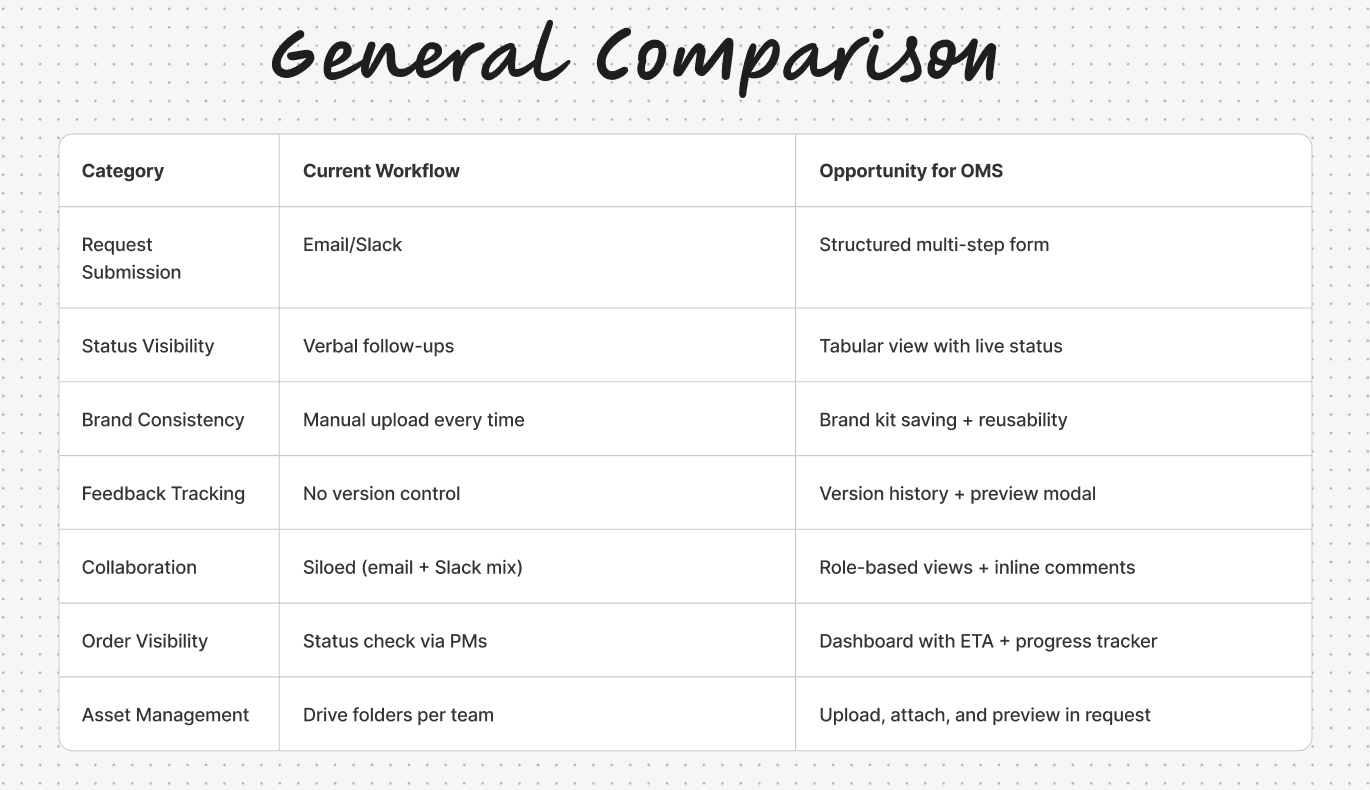
In the early stages of the project, we observed significant inefficiencies in how video requests, revisions, and brand asset alignments were managed across teams. Stakeholders often resorted to fragmented communication through emails or chat threads, leading to confusion, delays, and overlooked details.
The absence of a centralised system meant that brief misinterpretations, incorrect file formats, or missed feedback cycles directly impacted creative delivery speed and campaign quality. We set out to design an Order Management System that simplifies this flow across clients, creative teams, and internal project managers. The goal was to provide real-time visibility, reduce manual missteps, and promote structured collaboration.
We followed a lean discovery process combining internal team insights and patterns from ongoing operations. This included:
Stakeholder Interviews: Conducted with creative leads, PMs, account managers, and client partners.
Workflow Observation: Audited past order touch points to identify blockers and delays.
UX Audit: Mapped existing fragmented flows and how users currently hacked processes.
Design Goal for the MVP
Our MVP aimed to introduce just enough structure to unify the video request, revision, and approval pipeline—without overwhelming users. Each feature was intentionally designed to balance clarity, control, and creative freedom.
Key MVP Goals:
- Minimise ambiguity in campaign briefs via structured forms.
- Reduce feedback loops by embedding contextual comments and version previews.
- Boost transparency using visual dashboards and real-time status updates.
- Enable scalable collaboration across internal and client teams with modular design.
Features
Workflow
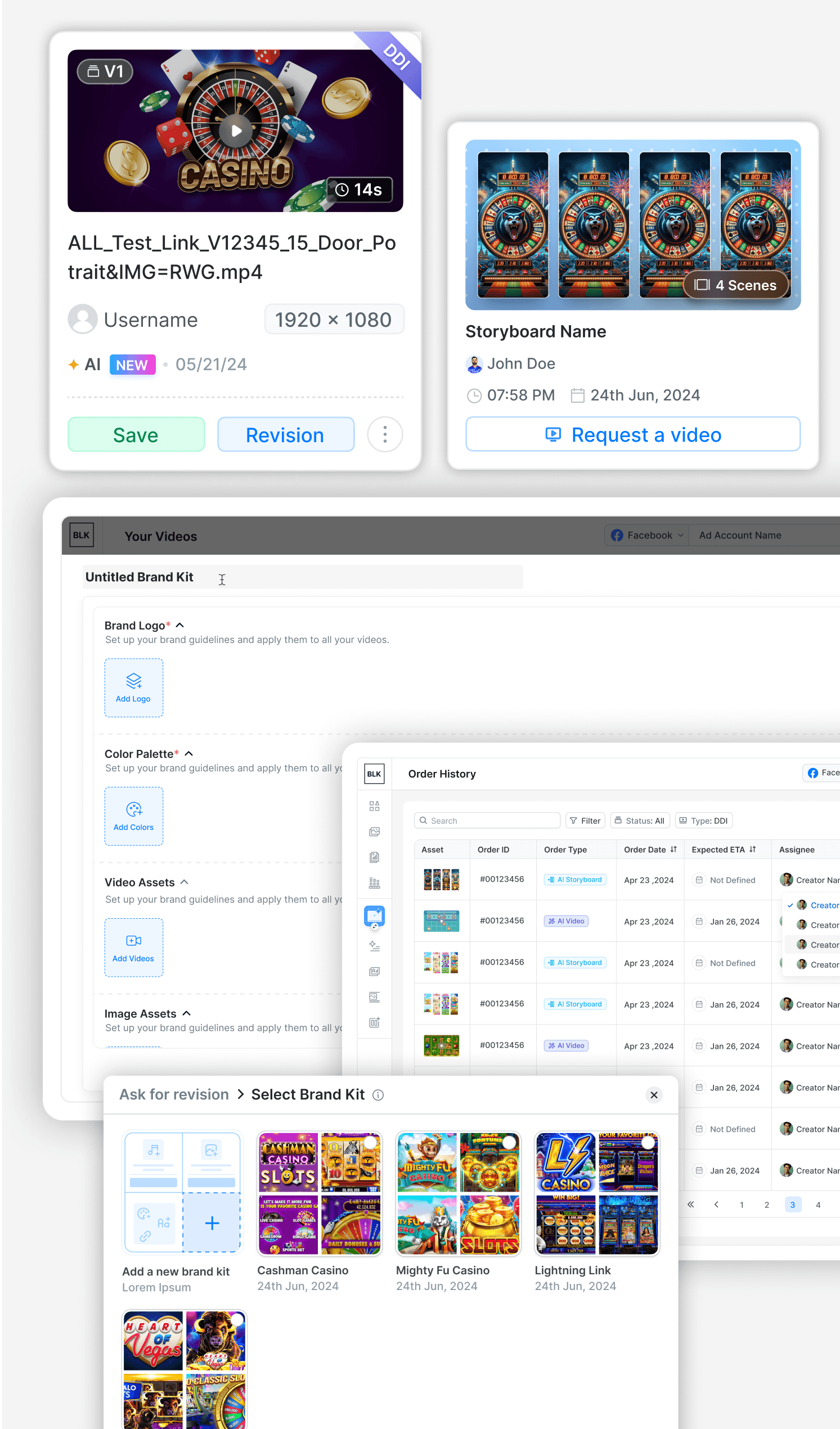
Order Initiation Flexibility
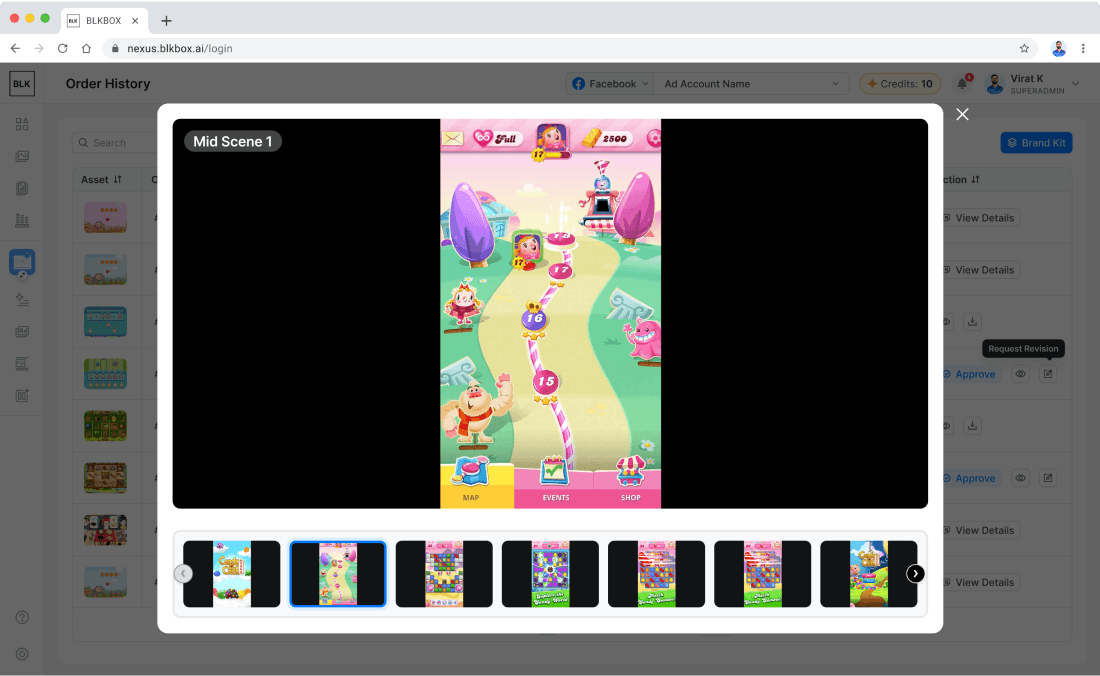
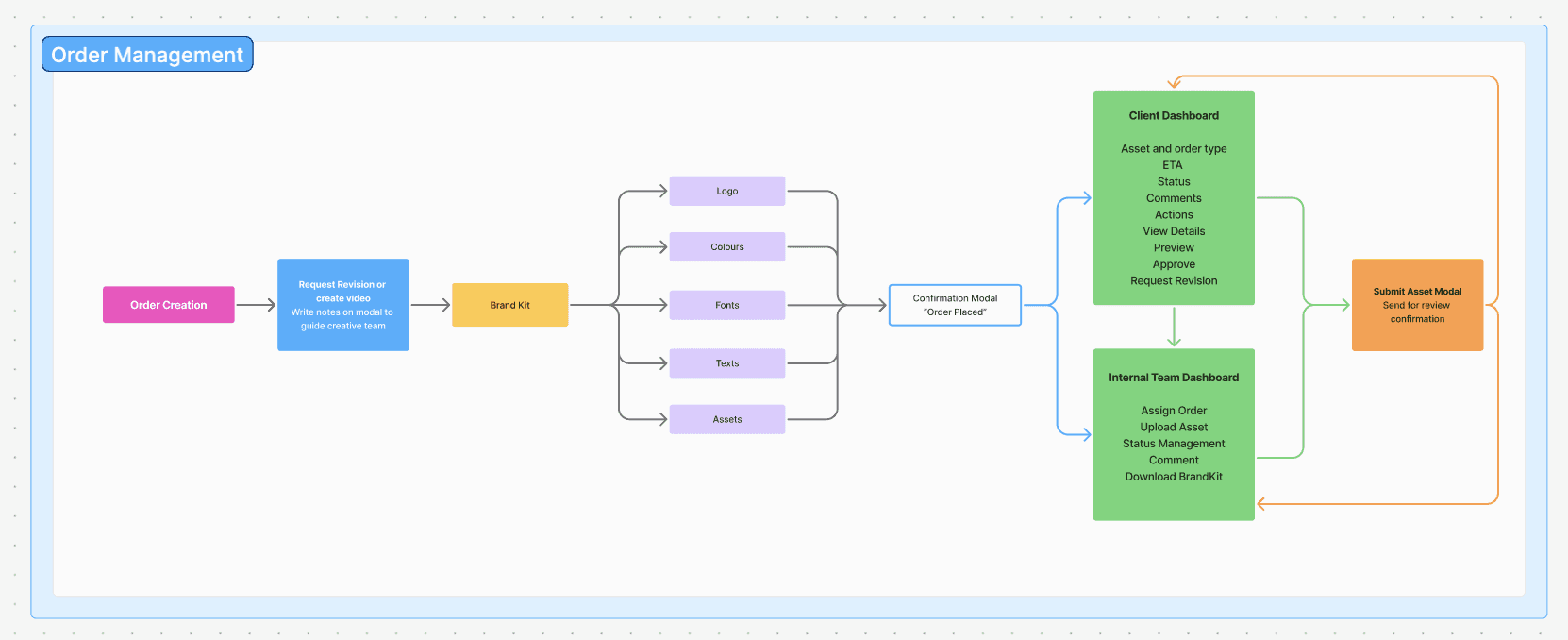
Users can either generate a fresh video request via AI storyboarding or revise an existing creative. A modal prompts for notes to guide the internal team, making every brief structured and goal-oriented.
Brand Kits
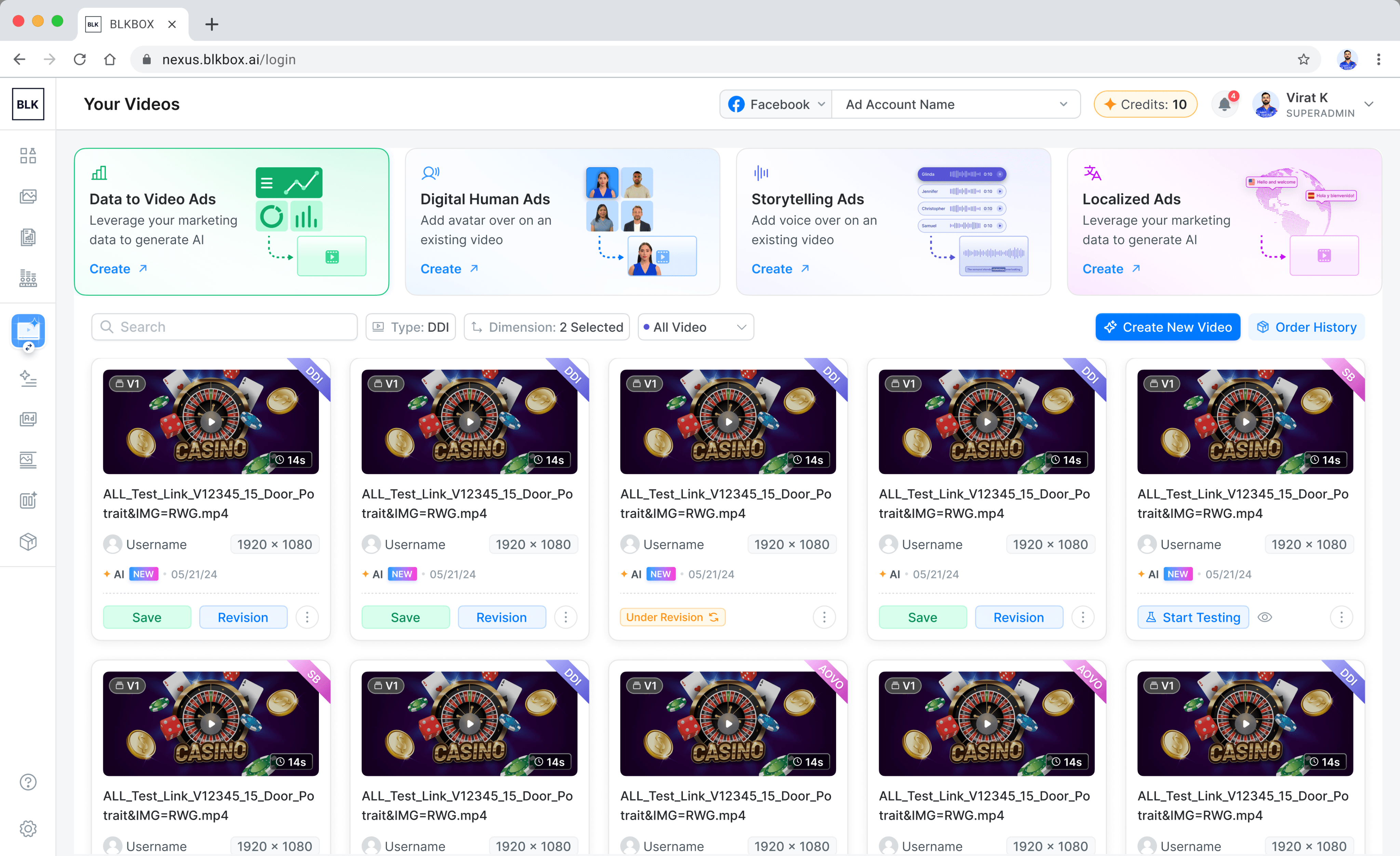
Users can build, save, and manage reusable brand kits containing logos, fonts, audio, colour palettes, creative guidelines, and more—ensuring consistency across all submissions.
Dual Dashboards for Teams
Tailored dashboard views for clients and internal teams provide relevant controls and visibility for each stakeholder, minimizing clutter and role confusion.
Visibility
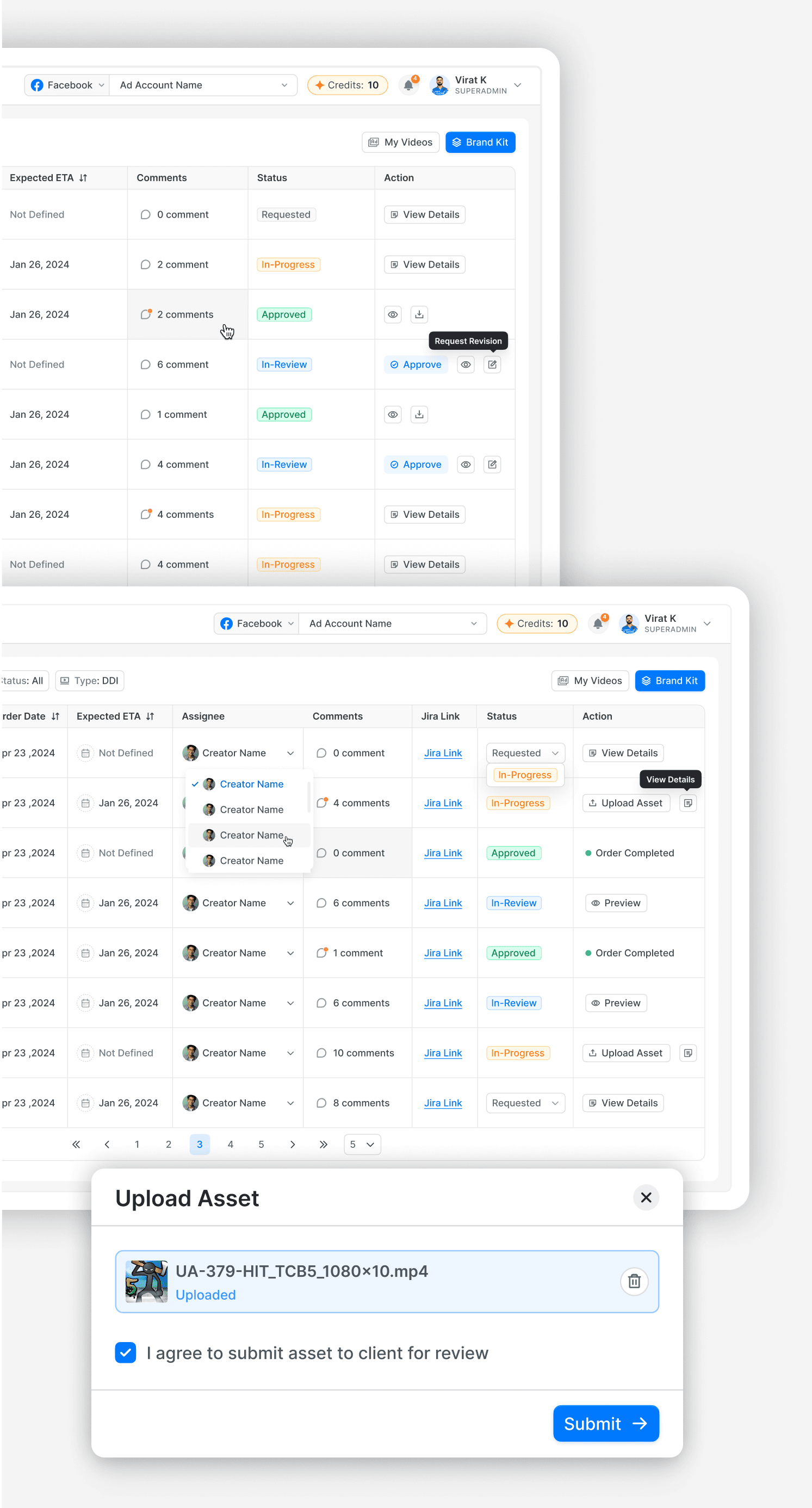
Real-time Status & Management
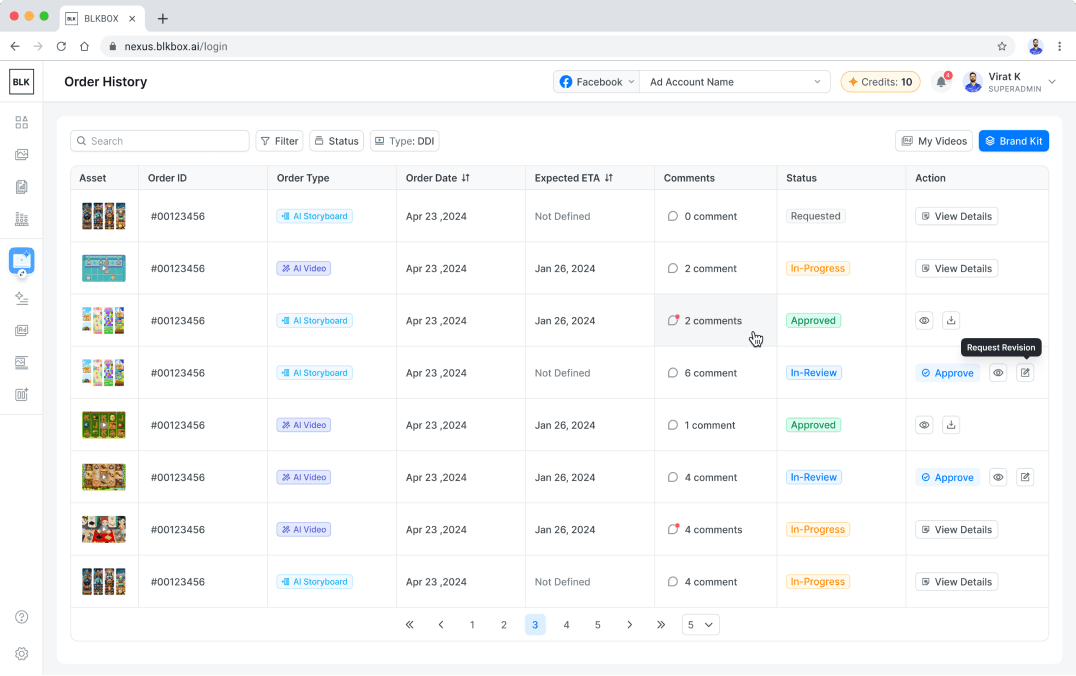
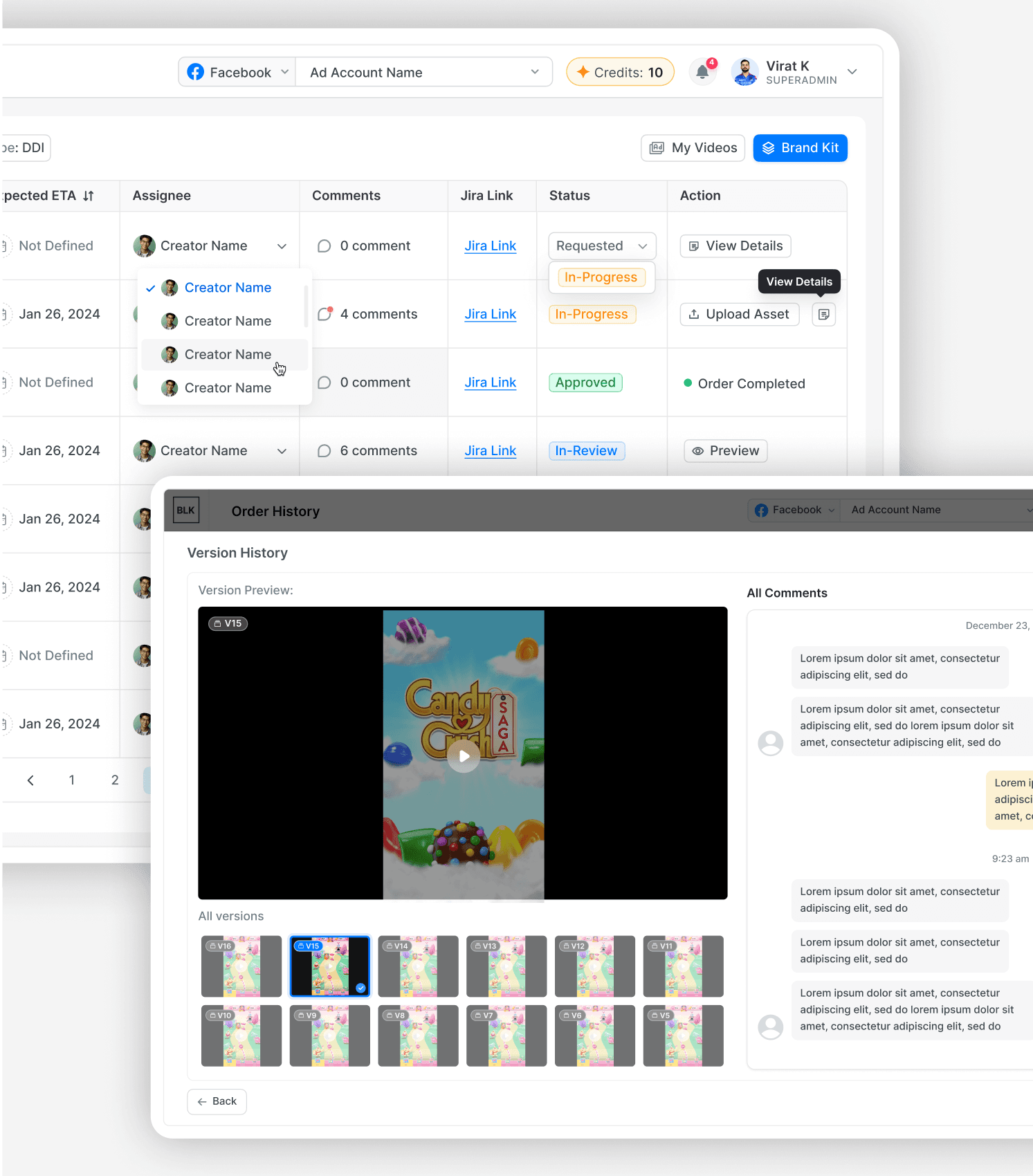
Live order states like “Requested”, “In Progress”, and “In Review” are visible across dashboards, helping users stay informed and removing the need for follow-ups.
Detailed Order Tracking
Client-side tables show every order’s asset type, ETA, submission date, and status—with corresponding CTAs for preview, comment, approval, or revision requests.
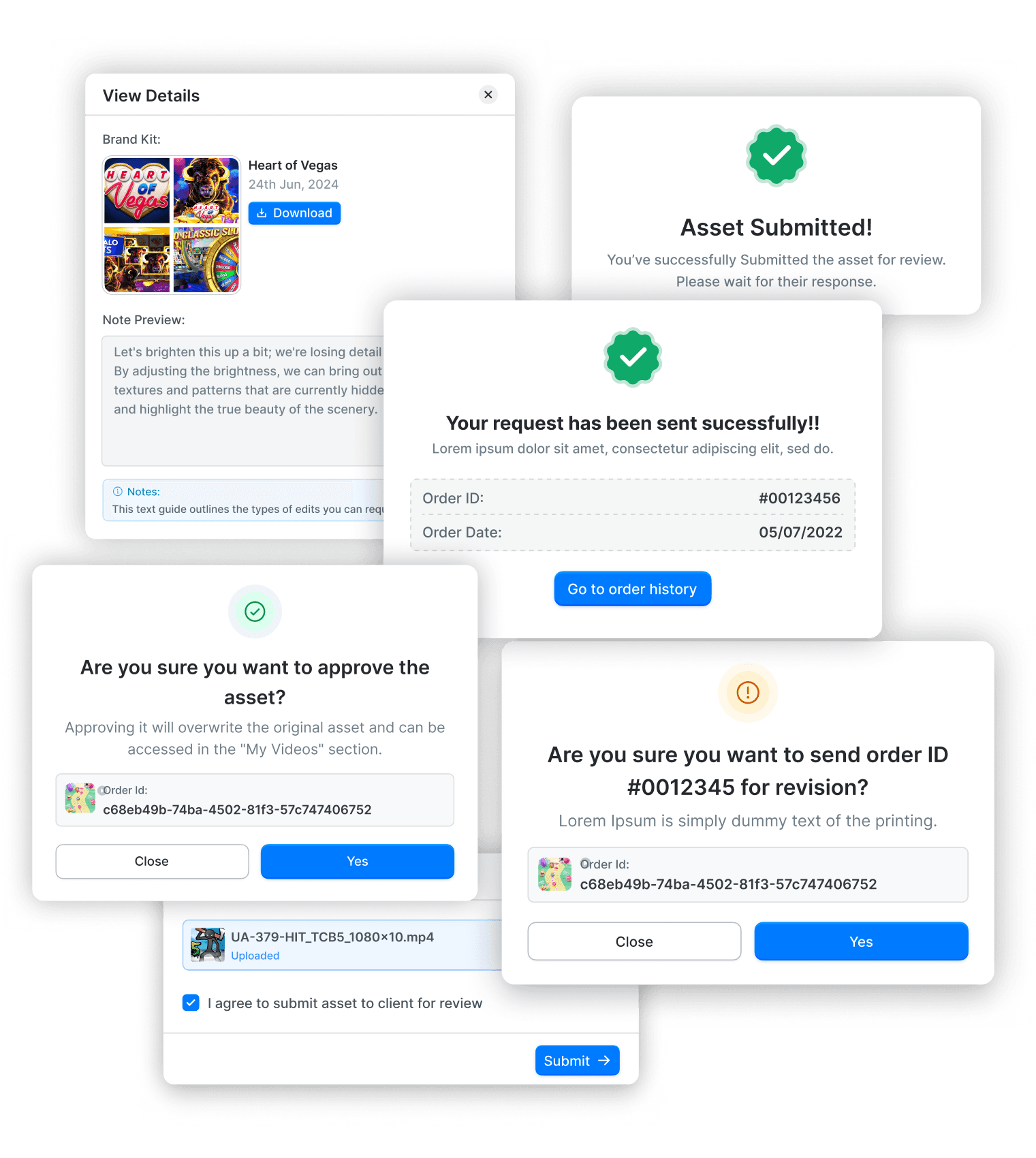
Submission Confirmation Modal
Before submitting a final asset, internal users go through a checklist-style confirmation modal to ensure the asset is final and polished.
Collaboration
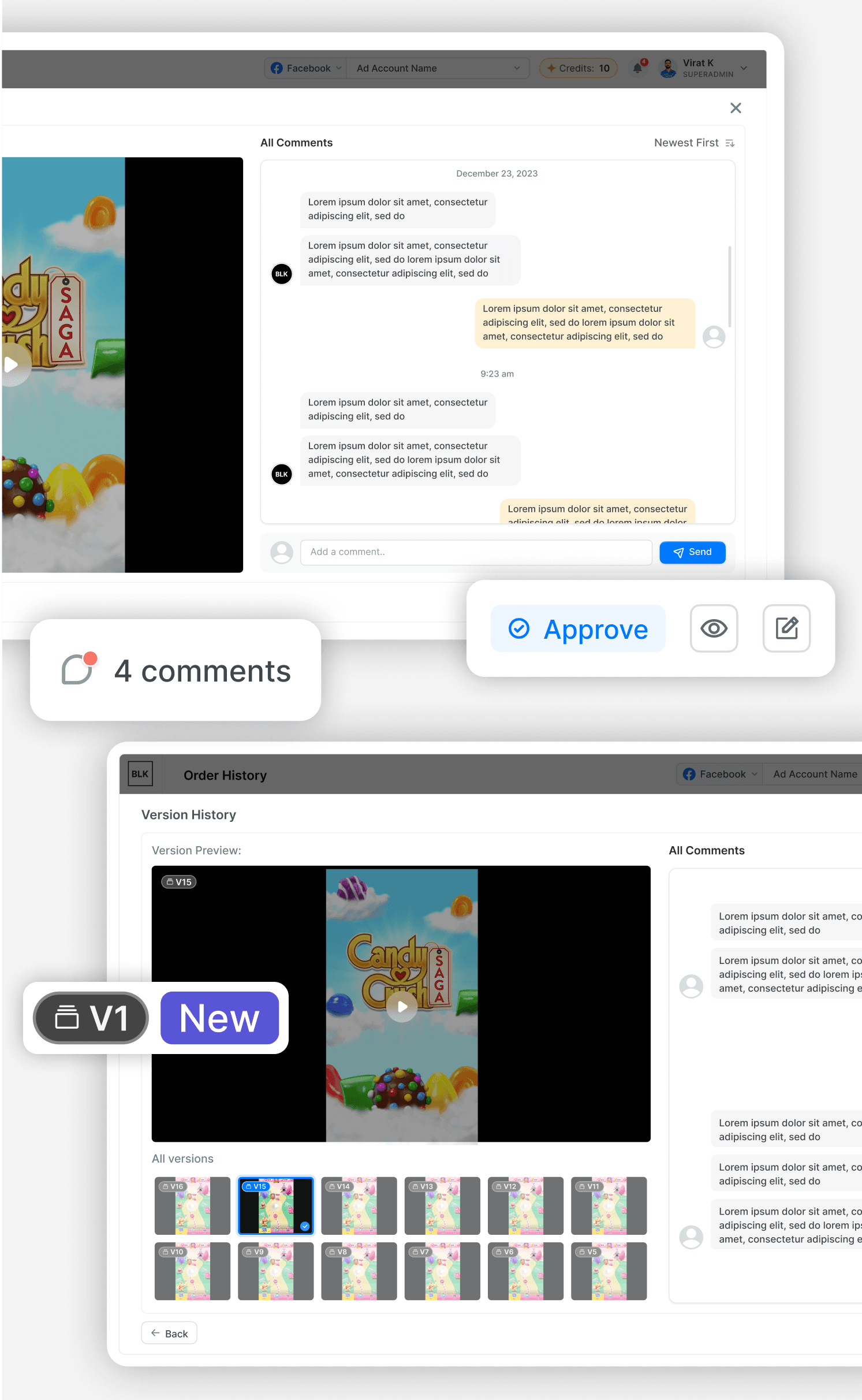
Commenting with Context
Each order includes a threaded commenting system, version-aware tagging, and visual indicators (like red dots and “New” labels), keeping feedback relevant and visible.
Version Control
A clean history of all uploaded versions helps both teams trace feedback evolution and explore creative iterations with clarity.
Internal Asset Review
Internal creators can upload new versions and preview notes, brand kits, and previous conversations before finalizing an asset submission.
Error Prevention
Smart Validation
Every form is embedded with inline validations, file-type enforcement, and visual warnings to reduce user error and prevent incomplete orders.
Guided Submission Workflow
Step-by-step modals and prompts ensure users know what’s expected at each stage—reducing confusion and unnecessary iterations.
Scalability
Component-Based UI
The system is built on a modular UI framework, allowing future features like creative analytics, performance tagging, or reusable templates to be added without disrupting core flows.
Expandable Order Logic
From AI-generated assets to manual uploads and hybrid flows, the OMS is designed to evolve with expanding product capabilities and client needs.
Impact
What did this product change or improve?
By introducing a centralized order management system, we replaced manual campaign coordination with a seamless, transparent, and scalable workflow. Teams could now submit, track, and approve creative video requests with clear timelines and zero ambiguity.
- 40% increase in accuracy of campaign briefs and asset delivery.
- 32% reduction in feedback loops through contextual notes and version tracking.
- Improved collaboration between internal creators and clients via real-time comments and role-based dashboards.
- Reduced dependency on Slack and emails for order status updates or brand kit exchanges.
- Positioned the platform as a client-first creative automation tool, improving customer satisfaction and adoption.
Reflection
How did I feel working on the Order Management System?
Designing the OMS was a highly fulfilling experience—it brought together systems thinking, workflow optimisation, and user empathy. It gave me the opportunity to solve a real operational gap that had long impacted campaign efficiency and cross-team alignment. Collaborating with the creative, product, and operations teams helped me better understand the friction points in creative production. I especially enjoyed designing a tool that brought clarity, accountability, and speed to everyone's day-to-day. Creating a system that made collaboration effortless felt incredibly impactful.
Copyright
Yashasvi Kishor. All rights reserved